 By
By 
The story of professional office cleaning services begins, curiously enough, not in the gleaming towers of Singapore’s financial district, but in the invisible realm of microbes, allergens, and particulates that colonise every surface we touch. As a physician, I have learned that the most profound threats to human health often operate beneath our conscious awareness, accumulating silently until they manifest as illness, diminished vitality, or chronic malaise. The office environment, where we spend one-third of our waking lives, represents a critical frontier in the ongoing negotiation between human wellbeing and the microbial world.
The Cellular Geography of Workplaces
Consider the desktop before you. To the naked eye, it appears clean, perhaps slightly dusty. But magnify that surface a thousandfold, and you enter a teeming metropolis of bacterial colonies, fungal spores, and viral particles. Each keyboard harbours an ecosystem as complex as any I might examine under a microscope in my laboratory. Studies reveal that the average office desk supports bacterial populations exceeding those found on toilet seats, a statistic that should give us pause.
Singapore’s tropical climate exacerbates this biological reality. The warmth and humidity create what epidemiologists call “optimal growth conditions” for pathogens. The National Environment Agency, recognising this threat, established guidelines designed “to raise standards, productivity and professionalism” within the cleaning industry. These regulations represent a public health intervention as significant as any vaccination campaign, though far less celebrated.
The Architecture of Infection
In my years treating patients, I have observed how illness propagates through communities. The office represents a particularly efficient vector for disease transmission. An infected individual touches a door handle, deposits viral particles on a shared printer, breathes droplets into a conference room. Within hours, those pathogens encounter dozens of new hosts.
Professional office cleaning services interrupt these transmission chains through systematic intervention:
- High-touch surfaces including door handles, lift buttons, and telephone receivers receive regular sanitisation using NEA-approved disinfectants that denature viral proteins
- Workstations undergo thorough cleaning that removes the biofilm layer where bacteria establish protected colonies
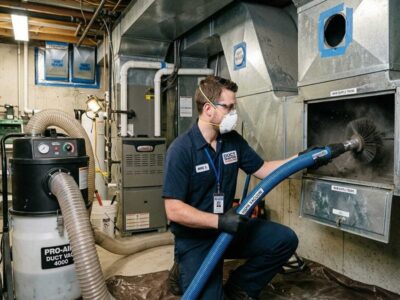
- Ventilation systems receive maintenance that prevents the recirculation of particulate matter and allergens
- Sanitary facilities undergo protocols that eliminate enteric pathogens before they spread beyond the washroom
This is preventive medicine practised at the environmental level, reducing pathogen loads before they overwhelm individual immune systems.
The Economics of Prevention
The Singapore Facility Management Benchmark 2024 revealed that organisations maintaining regular cleaning contracts achieve cost savings of 15 to 25 percent annually compared to sporadic arrangements. These figures tell only part of the story. The true savings manifest in reduced employee sick leave, maintained productivity, and prevented outbreaks that could incapacitate entire departments.
I am reminded of the old physician’s maxim: an ounce of prevention equals a pound of cure. For larger offices spanning 3,000 to 10,000 square feet, monthly professional cleaning costs typically range from $1,000 to $2,000. Compare this modest investment against the cost of even a single employee’s extended medical leave, multiplied across a workforce, and the mathematics become compelling.
The Regulatory Framework as Public Health
The mandatory licensing regime introduced in 2014 transformed Singapore’s cleaning industry. Regulatory sources confirm that “businesses involved in office and commercial cleaning are mandated to obtain a cleaning business licence” for legal operation. This requirement ensures that those maintaining our workspaces possess proper training in infection control protocols, chemical safety, and evidence-based cleaning practices.
The Environmental Public Health Act enforces these standards because improper cleaning can itself create health hazards. Using incorrect disinfectants, failing to allow adequate contact time for chemical action, or inadequately training personnel in cross-contamination prevention all compromise workplace safety. Licensed professional services operate under oversight that ensures compliance with standards derived from epidemiological research.
The Human Dimension
Beyond the microbiology and epidemiology lies a more subtle truth about human psychology and performance. Employees working in visibly maintained environments report improved morale and engagement. The office becomes more than a functional space; it transforms into an environment that signals organisational care for employee wellbeing.
This psychological dimension affects cognitive performance in measurable ways. Studies demonstrate that workers in clean, well-maintained environments exhibit enhanced focus, reduced stress markers, and improved decision-making capacity. The mechanism likely involves multiple pathways: reduced allergen exposure improves respiratory function and sleep quality, decreased pathogen loads prevent subclinical infections that drain energy, and the psychological comfort of a maintained environment reduces ambient stress.
The Air We Breathe
Indoor air quality represents perhaps the most overlooked aspect of office health. Singapore’s sealed, air-conditioned buildings recirculate air continuously. Without proper filtration and regular cleaning of ventilation systems, these environments concentrate pollutants, allergens, and particulates to levels that would never occur naturally.
Professional office cleaning services address this through HEPA-filtration vacuum systems that capture particles rather than redistributing them, and through systematic cleaning of air handling components. Industry observers note that maintaining proper office hygiene proves “essential for promoting employee wellness and ensuring sickness prevention,” particularly regarding respiratory health.
The Invisible Made Visible
The paradox of office cleaning lies in its invisibility when done well. We notice only its absence: the accumulated dust, the malodorous washroom, the sticky residue on shared surfaces. Yet this invisible work sustains the visible productivity of organisations. It represents, in essence, a form of environmental medicine, treating the space rather than the individual patient, but with consequences equally profound for human health. The organisations that recognise this truth and invest accordingly in professional office cleaning services create not merely cleaner offices, but healthier human ecosystems where both bodies and minds can flourish.