 By
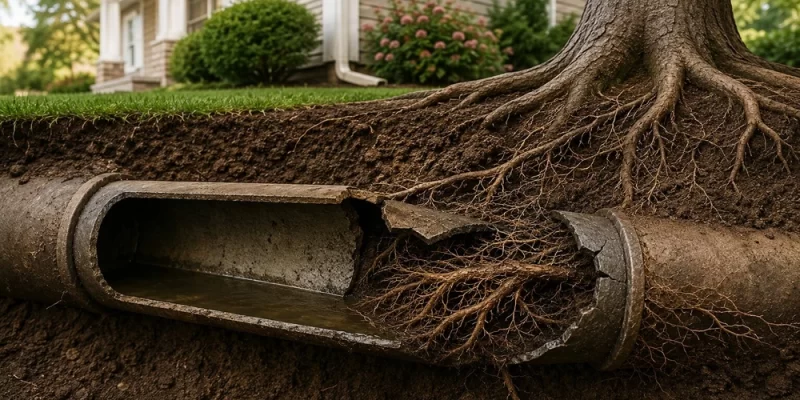
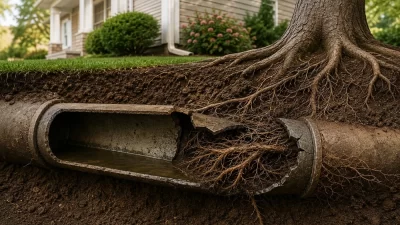
Homes in Montezuma County send their wastewater down one of two very different paths. Houses inside Cortez, Dolores and Mancos usually connect to a town or sanitation district collection system, while most rural properties rely on a septic tank and drainfield. In both cases the pipe running from the house to the main or tank, called the building sewer or lateral, belongs to the homeowner. It sits underground in clay heavy soil that swells and shrinks with moisture, freezes deeper than many people expect at 6,000 feet, and sits close to thirsty cottonwood and elm roots. Lines rarely fail without warning, and the warnings tend to show up in a predictable order.
When those warnings start appearing, homeowners looking for Montezuma County sewer service that begins with a camera instead of a guess can call the crew at avalancheplumbers.com. This family run team handles sewer cleaning with professional machines, camera inspections, plumbing repairs and round the clock emergency calls across Cortez and the surrounding area. Getting a line inspected before winter is far cheaper than digging up a frozen yard in January.
Who Owns Which Part of the Pipe
Before reading the clues, it helps to know where responsibility changes hands. On a town connection, the district maintains the main in the street and the homeowner owns the lateral from the house to that main, including the tap. On a septic property, everything from the toilet to the far end of the drainfield is the owner’s responsibility.
Permitting follows the same split. Montezuma County does not run a building department or enforce residential building codes, but septic work is a different matter. New systems and repairs go through the Montezuma County Public Health Department, which administers the state’s Regulation 43 along with local on site wastewater rules the county adopted in March 2026. Plumbing work itself still falls under Colorado’s state licensing for plumbers, so the lack of a county building office doesn’t mean sewer repairs are unregulated.
Clues You Notice Indoors
1. Several drains slow down at the same time. One sluggish sink usually means a clog in that fixture’s trap. When the tub, a floor drain and a toilet all slow down together, the restriction is downstream of where those branches meet, which points to the main line. The lowest fixtures in the house, often a basement shower or floor drain, show the problem first because wastewater backs up to the lowest opening.
2. Toilets gurgle when something else drains. A toilet that bubbles while the washing machine empties is telling you air has nowhere else to go. A partial blockage in the lateral forces air back up through the nearest water seal instead of out through the vent stack. Gurgling that gets louder over a few weeks typically means the blockage is growing, often from roots or grease buildup.
3. A sewer smell shows up indoors. Odor can come from a dried out trap in a rarely used bathroom, which a cup of water fixes. A persistent smell near the main cleanout or in the basement, however, can mean a cracked pipe or a failed joint letting sewer gas escape. In older homes with cast iron drains, corrosion along the bottom of the pipe often opens these gaps long before the pipe collapses.
Clues You Find Outside
4. A green or soggy strip appears in a dry yard. Southwest Colorado gets only around a foot of precipitation a year, so a stripe of unusually lush grass during a dry spell stands out. Over a lateral, it often traces a leak feeding the soil. Over a drainfield, standing water or spongy ground suggests the soil can no longer absorb what the tank sends out. The EPA’s guidance on inspecting and pumping a household septic system calls for an inspection at least every three years and pumping every three to five, and skipping that schedule is one of the most common reasons drainfields saturate.
5. The cleanout holds standing water. Most homes have a capped cleanout pipe near the foundation or in the yard. If you remove the cap and see water sitting in it, wastewater is not moving past that point. Backups that appear right after heavy use, such as holiday guests, several loads of laundry or a full dishwasher run, follow the same pattern and should not be written off as bad luck.
6. The ground sinks along the line. A shallow trench shaped depression running from the house toward the street or tank can mean soil is washing into a broken pipe. Expansive clay makes this worse, since repeated wetting and drying moves the ground around buried pipe and stresses older joints. Clay tile and Orangeburg pipe, still found under homes built between the 1940s and 1970s, are especially prone to shifting and cracking.
Same Clue, Two Different Systems
| Clue | On a town sewer connection | On a septic system |
|---|---|---|
| Slow drains in several fixtures | Root or grease blockage in the lateral | Full tank or blocked outlet baffle |
| Gurgling toilets | Partial lateral blockage | Tank near capacity or saturated field |
| Indoor sewer odor | Cracked pipe or failed joint | Same, plus a backing up tank |
| Green or soggy strip | Leak along the lateral | Drainfield failing to absorb |
| Water in the cleanout | Main line restriction | Tank or line to tank blocked |
| Sinking ground | Broken or separated pipe | Collapsed line or tank lid issue |
What a Camera Changes
Every clue on this list narrows the problem without fully identifying it. A sewer camera fed through the cleanout shows the pipe material, the exact depth and distance of a root intrusion or break, and whether the line has a belly where water and solids settle. That footage decides whether a machine cleaning will restore flow for years or whether a section needs replacement.
Repair options have also widened. Trenchless pipe lining and pipe bursting are increasingly used across the West to replace damaged laterals without excavating an entire yard, though not every line is a candidate. Septic owners, meanwhile, face a growing focus on records, as county health departments tighten documentation for permits and property sales. A dated camera inspection and pumping receipts give any Montezuma County homeowner a clear picture of the line beneath their yard, whichever path their wastewater takes.