 By
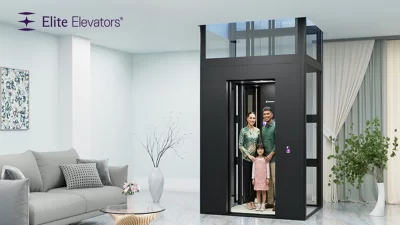
Safety remains the single most important factor when choosing any residential lift, and understanding exactly what home lift safety features a well-engineered modern home lift should include helps buyers evaluate options with genuine confidence rather than relying on general marketing claims.
Safety features are also one of the hardest things to evaluate purely from a brochure, since most of them only become relevant during rare, high-stakes moments like a power outage or an overload event. Understanding how they work, rather than simply trusting that they exist, gives buyers a far clearer basis for comparison.
Why Layered Safety Systems Matter
No single safety mechanism should be relied upon in isolation. Elite Elevators’ well-designed lift combines multiple independent systems, each addressing a different potential failure point, so that if one system doesn’t activate as expected, others provide continued protection. This principle, often called redundancy, is standard practice across safety-critical engineering generally, not unique to home elevators.
Core Home Lift Safety Features to Look For
Automatic rescue devices (ARD): Safely lower the cabin to the nearest floor during a power interruption, allowing passengers to exit without assistance.
Overload sensors: Prevent operation beyond the rated weight capacity, protecting both passengers and mechanical components.
Door interlock systems: Ensure the lift only operates when doors are fully closed, and prevent doors from closing on an obstruction.
Emergency communication systems: GSM-based calling functionality allows passengers to reach support directly from the cabin.
Anti-crush and anti-fall mechanisms: Provide structural protection throughout the ride, particularly important during unusual operating conditions.
Battery backup power: Ensures continued operation of lighting and communication systems even during an outage.
Emergency stop controls: Give passengers direct control to halt movement if they feel unsafe or uncertain during a ride.
Advanced Home Lift Safety Features in Current Models
Beyond these foundational systems, current-generation lifts increasingly include additional layers:
Remote diagnostics and fault monitoring: Allow potential issues to be flagged and addressed before they affect normal operation.
Restricted floor access: PIN or biometric-based controls prevent unauthorised use of specific floors, adding a security dimension alongside physical safety.
Cabin cameras with unauthorised access alerts: Provide an additional monitoring layer, particularly valuable for households with elderly residents or young children.
Smart floor positioning: Auto re-levelling technology ensures precise alignment with floor height, reducing trip risk during entry and exit.
What Certification Should a Modern Home Lift Carry?
Independent certification against recognised standards provides confirmation that these safety systems have been properly tested, rather than relying solely on manufacturer claims. Standards such as EN 81-20 and EN 81-50 represent some of the most respected benchmarks for elevator safety and performance internationally, and verification by an independent testing body adds a further layer of confidence.
Comparing Foundational and Advanced Safety Layers
| Safety Layer | Foundational Systems | Advanced Systems |
| Power failure response | Automatic rescue device | Remote diagnostics flagging issues in advance |
| Access control | Standard door interlocks | Biometric or PIN-based restricted access |
| Monitoring | Manual inspection only | Continuous remote fault detection |
| Passenger protection | Overload sensors, anti-crush mechanisms | Combined with cabin cameras and alerts |
How Should Buyers Weigh Foundational vs Advanced Features?
It’s worth being clear that advanced features are meaningful additions, not replacements, for foundational safety systems. A lift with an impressive cabin camera and biometric access, but weak overload protection or unreliable door interlocks, would still represent a poor safety choice overall. The right approach is to first confirm the foundational systems are genuinely robust and certified, then treat advanced features as valuable extras layered on top, rather than a substitute for core safety engineering.
Elite Elevators’ Layered Safety Approach
Elite Elevators’X400 Mark II Plus exemplifies this layered approach, combining a dual emergency braking system, Live SOS 2.0 for real-time emergency assistance, an automatic rescue device for power cuts, and VisionLog camera monitoring with unauthorised access alerts – all certified to EN 81-20 and EN 81-50. The E200 and E300 hydraulic and cogbelt models take a similarly comprehensive approach with automatic rescue devices, overload protection, door interlock systems, and anti-crush and anti-fall mechanisms, certified to EN 81-41, demonstrating that robust safety layering isn’t limited to any single drive system or price tier.
Questions to Ask When Evaluating Safety Features
- What specific certification does this model carry, and can it be independently verified?
- How many distinct safety systems work together, rather than relying on just one mechanism?
- How does the emergency communication system function during a power outage?
- What happens during an actual overload event, step by step?
- Are advanced features like remote diagnostics included as standard, or as an upgrade?
Common Misconceptions About Home Lift Safety
“More expensive automatically means safer.” Safety depends on the specific systems included and their certification, not price alone.
“Basic models lack adequate safety features.” Even more streamlined models can include comprehensive layered safety systems; it’s worth confirming directly rather than assuming.
“Certification numbers don’t matter for consumer-facing decisions.” While detailed technical certification numbers aren’t always necessary to communicate, confirming general compliance with recognised standards absolutely matters.
Common Mistakes When Evaluating Safety Features
Assuming all “safety-certified” claims are equivalent: Always ask which specific standards apply and whether compliance has been independently verified.
Focusing only on advanced features while overlooking foundational systems: A cabin camera means little if basic overload protection or door interlocks aren’t robust.
Not asking how systems work together: Understanding the full layered approach matters more than evaluating individual features in isolation.
Conclusion
A genuinely well-engineered modern home lift should combine foundational safety systems – automatic rescue, overload protection, door interlocks, and emergency communication – with additional advanced layers where available, all backed by recognised independent certification. Understanding this full picture, rather than focusing on any single advanced home lift safety features claimed in isolation, is the most reliable way to evaluate genuine safety across different models and price points.
Frequently Asked Questions
1. What are the most important safety features in a home lift?
Automatic rescue devices, overload sensors, door interlock systems, and emergency communication together form the foundation of home lift safety.
2. What certification should a modern home lift have?
Look for compliance with recognised standards such as EN 81-20, EN 81-50, or EN 81-41, ideally verified by an independent testing body.
3. Do all home lifts include automatic rescue devices?
Most quality models do, though it’s worth confirming directly rather than assuming this is universal across all products.
4. Are advanced safety features like cabin cameras necessary?
They add an extra layer of monitoring and peace of mind, though foundational safety systems remain the most critical baseline.
5. How does emergency communication work if the internet is down during an outage?
Quality systems typically use independent GSM connectivity, allowing communication without relying on home internet service.
6. Does a higher price always mean better safety features?
Not necessarily; safety depends on the specific systems included and certification, which should always be confirmed directly rather than assumed from price alone.