 By
By mid July, plenty of houses along the Hudson have the same look. A window unit hangs out of every bedroom, extension cords run along the baseboards, and the living room depends on one tired box fan. These homes usually stay warm all winter with hot water or steam radiators. The trouble starts in summer, because a house built around a boiler was never given the ductwork that central air needs.
Many owners assume they’re stuck with window units. They aren’t. Over the past twenty years, the ways to cool a duct-free house have grown a lot, and some of them can also take over part of the heating. The best choice depends on the layout, the attic, the electrical panel and how much the family is willing to open up walls and closets.
Plenty of homeowners in northern Rockland start by asking a local Haverstraw hvac company to look over the house. cvplumbingandpools.com is a family-run outfit on Fairmount Avenue that has handled boilers and air conditioning across Rockland and nearby Bergen County since 1999. The questions homeowners bring are usually the same, and they work best when answered in order.
Start With the House You Actually Have
Before talking about equipment, a good contractor looks at the building. A two-story colonial with an open attic offers different possibilities than a split level with a low, finished top floor. Plaster walls, closets that stack on top of each other, and the space between floor joists all affect where cooling lines or small ducts can run without tearing the house apart.
The electrical service matters just as much. Older homes in the area often still have 100 amp panels that already run a dryer, an electric range and a few window units. Adding an outdoor condenser or two may mean a panel upgrade, and that cost should be counted from the start, not discovered halfway through the job.
On the first walkthrough, these are the questions worth asking:
- Can the attic floor be reached and walked, and how hot does it get in August?
- Do the closets on the first and second floors line up vertically?
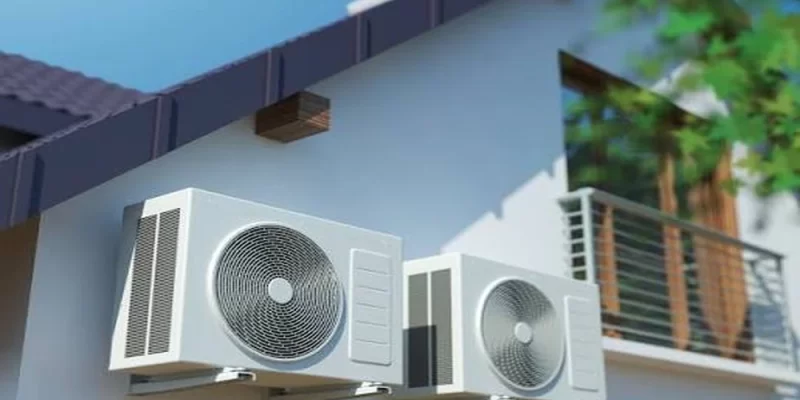
- Where could outdoor units go without blocking a walkway, a driveway or a neighbor’s window?
- How much spare capacity does the electrical panel have?
- Which rooms get hot first, and which are hardly used in summer?
Four Routes to Cool Air Without Ducts
Ductless mini splits
This is the most common answer. An outdoor unit connects to slim indoor heads mounted high on the wall, using a refrigerant line set that passes through a hole about three inches wide. One outdoor unit can serve several rooms, and each room gets its own setting. A bedroom can stay cool overnight while the rest of the house stays warmer.
The trade-off is how they look. Some people don’t mind a white head above the window. Others dislike it, especially in a carefully restored older room. Ceiling cassettes and floor-mounted consoles hide the equipment better, at a higher price.
Slim ducted air handlers
A compact air handler hidden in a closet, a crawlspace or the attic can feed short duct runs to two or three nearby rooms. You get small grilles instead of wall heads, and the system still uses the efficient variable-speed technology found in ductless units. It works best for a group of bedrooms that share one floor.
High-velocity small-duct systems
These run flexible tubes about two inches wide through walls and floors, ending in small round outlets that blend into the ceiling. Older homes with tight framing are where they work best, because the tubes can bend around obstacles that would block a normal duct. They also remove humidity well. They cost more, and a poorly done installation can leave a noticeable rush of air at each outlet, so the installer’s experience matters a great deal.
Conventional ducts through the attic
In a house with an accessible attic, a standard air handler with ducts can cool the top floor and sometimes the floor below through a chase built in stacked closets. The weak point is the attic itself. Ducts in an attic that reaches 130 degrees lose a lot of cooling before the air ever reaches a room, unless every joint is sealed and the ducts are heavily insulated.
Humidity Is the Real Summer Problem
Houses near the river don’t just get hot, they get damp. An oversized air conditioner cools the air quickly, shuts off and leaves the moisture behind, which makes the house feel cold and clammy at once. That’s why sizing should come from a proper load calculation, not from adding up the window units the family used to run.
Variable-speed equipment helps here. It can run long and slow on muggy evenings and pull water out of the air the whole time. Many indoor units and thermostats also have a dry mode, which is worth using on those heavy July nights when the temperature isn’t extreme but the air feels thick.
When the Cooling System Starts Sharing Winter Duty
Every system described above can be a heat pump, which is where the project starts to look better on paper. A heat pump installed for summer cooling can also heat the house through October, November and the milder parts of spring. The boiler then waits for the truly cold weeks.
Not every heat pump handles a Hudson Valley January well, so the model matters. The Northeast Energy Efficiency Partnerships keeps a cold climate heat pump product list that shows how listed units perform at low outdoor temperatures, which is more useful than the standard efficiency rating alone. Comparing models on that list helps homeowners avoid equipment that runs out of heating capacity just when it’s needed.
Running two heat sources means the controls need some thought. Without coordination, the boiler and the heat pump can work against each other, with radiators heating one room while a wall unit tries to cool it on a mixed spring day. A simple outdoor temperature changeover point, or a thermostat built for dual fuel, keeps each system in its own lane.
Living With the New Setup
New equipment brings new upkeep. Indoor heads have washable filters that need rinsing every few weeks while the system is running hard. Their condensate lines can clog with algae, and the first sign is often a drip down the wall. Outdoor units need clear space around them, and after a heavy snowfall someone should check that they aren’t buried, since a heat pump in heating mode has to shed ice off its coil.
The refrigerant has changed too. Systems installed since the recent federal phasedown use newer, mildly flammable refrigerants, so line sets, sensors and installation methods follow updated rules. That’s a good reason to have a trained technician handle any refrigerant work instead of a general handyman.
Done well, the result feels completely different from window units. The windows open again, bedrooms stay steady through the night, and the cords disappear from the floors. The radiators keep doing what they’ve done well for decades, while the new system handles summer and takes some winter load off the boiler.